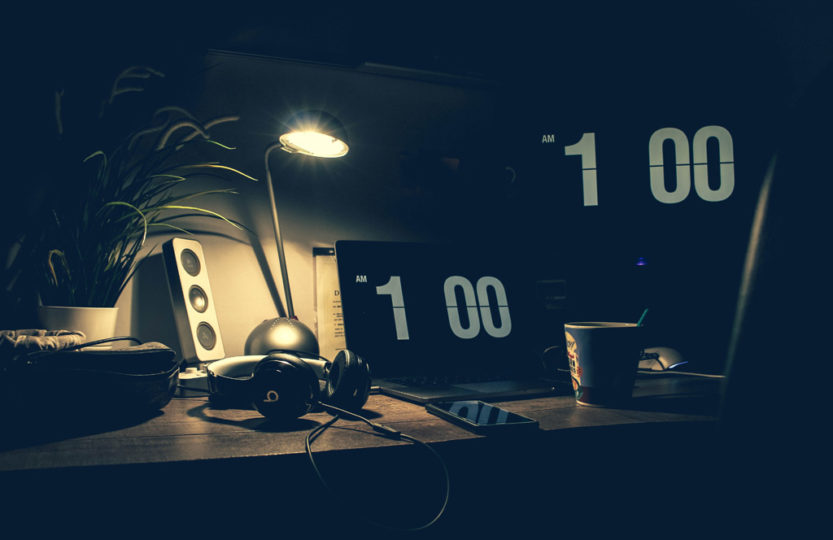
Being in lockdown has brought many changes to our schedules and habits, and with the possibility of moving into level 2 just around the corner, it might be time to look at tweaking your teen’s sleeping routine. Especially if they have adopted the ‘vampire’ type lifestyle.
Not all teenagers are going to be excited about going to bed earlier and losing their sleep-in. After all, we are still in lockdown and trying to do our best to get through it well.
So the changes may need to be incremental at this stage. Even half an hour at either end could make the transition back to school easier.
You may have noticed that your teen wants to stay up much later than they used to. That’s because after puberty there is a biological shift in their internal clock of about 2 hours. If your teen used to fall asleep at 9 pm, they will now not feel tired until around 11 pm.
The teenage brain doesn’t start to secrete melatonin until later in the evening. Melatonin is responsible for telling us it’s time to go to bed. Maybe you have noticed how much energy and enthusiasm they have at night.
Because melatonin production doesn’t start until later at night, it takes a bit longer for the melatonin levels to drop in the morning. Which can result in a sleepy teenager.
Teenagers have been described as having the ‘wolf chronotype’.
This chronotype often has trouble waking up in the morning. They feel more energetic when they wake up at noon, especially since their peak productivity starts at noon and ends about four hours later. Wolf types also get another boost around 6 pm and find they can get a lot done while everyone else is done for the day.
Our teens are probably feeling a bit sleep deprived by the end of the week, they need around 9 hours of sleep every night, so they try to catch up on sleep on the weekend. Unfortunately, this disrupts their circadian rhythm.
The sleepfoundation.org says, our circadian rhythm is basically a 24-hour internal clock that is running in the background of our brain and cycles between sleepiness and alertness at regular intervals. It’s also known as your sleep/wake cycle.
So if your teen is sleeping in until noon over the weekend it will disrupt their body clock, and by Monday morning they might feel like they have jet lag.
If possible, keep weekend sleeping into around 2 hours of what their normal weekday wakeup time would be. If they get up at 7 am, let them sleep in until around 9 am, this helps to keep their body clock regular.
And I know it’s a big ask, but the same goes for what time they go to bed on the weekend. I’m just not sure that’s realistic for a teenager though. But if we at least pass this information on to them about sleep health, they can make an informed decision about getting to bed a bit earlier on a school night.
Eventually, they will learn through natural consequences that you can’t burn a candle at both ends.


 Hi I'm Robayne, a freelance writer and mum of two delightful teenagers. Parenting teens is quite the journey so I have created this space as a way to share stories and connect with others who are walking the same path. I have studied freelance journalism at the NZ Writers College and I create content over at